Concept visualization of coral light between engineered geometric boundaries
GEOMETRY-DRIVEN PHYSICS / CHRISTOPHER HILL

Shape the boundary.
Change the response.

We investigate how geometry changes the behavior of matter—from quantum confinement to measurable engineering systems.

AI CONCEPT ARTWORK / NOT A DEVICE OR EXPERIMENTAL RESULT
THE BOUNDARY LAB / CALCULATED, NOT MEASURED

Move the boundary.
Watch the spectrum.

The same nominal material. A different width. Explore the first two bound states in our finite-well model.

8 nm20 nm

Drag or use the arrow keys. Values come from a precomputed width sweep; this is an energy-level diagram, not a particle trajectory.

Transition E₂ − E₁91.17 meV
Change from 10 nm0.00 meV

261 meV barrier · well mass 0.067 mₑ · barrier mass 0.0879 mₑ
Assumptions, verification and model limits →

NEW / THE QUANTUM-TO-MACRO LAB

How does something so small
become something we can measure?

Travel from one quantum well to an instrument reading. Five stages. Interactive spectra. Every assumption visible.

Enter the visual lab ↗
10 nmTHE START OF A MUCH BIGGER QUESTION
CURRENT WORKFinite-well geometry model
VERIFICATIONTwo solver methods compared
NEXT EVIDENCEPhysical measurement
LONG-TERM AIMUseful, protectable systems
01 / THE IDEA

The arrangement
is part of
the answer.

A boundary changes what can happen inside it.

A guitar string, an optical cavity and a quantum well each connect geometry to behavior. Our task is to turn that relationship into precise predictions, testable devices and useful technical improvements.

Follow the science
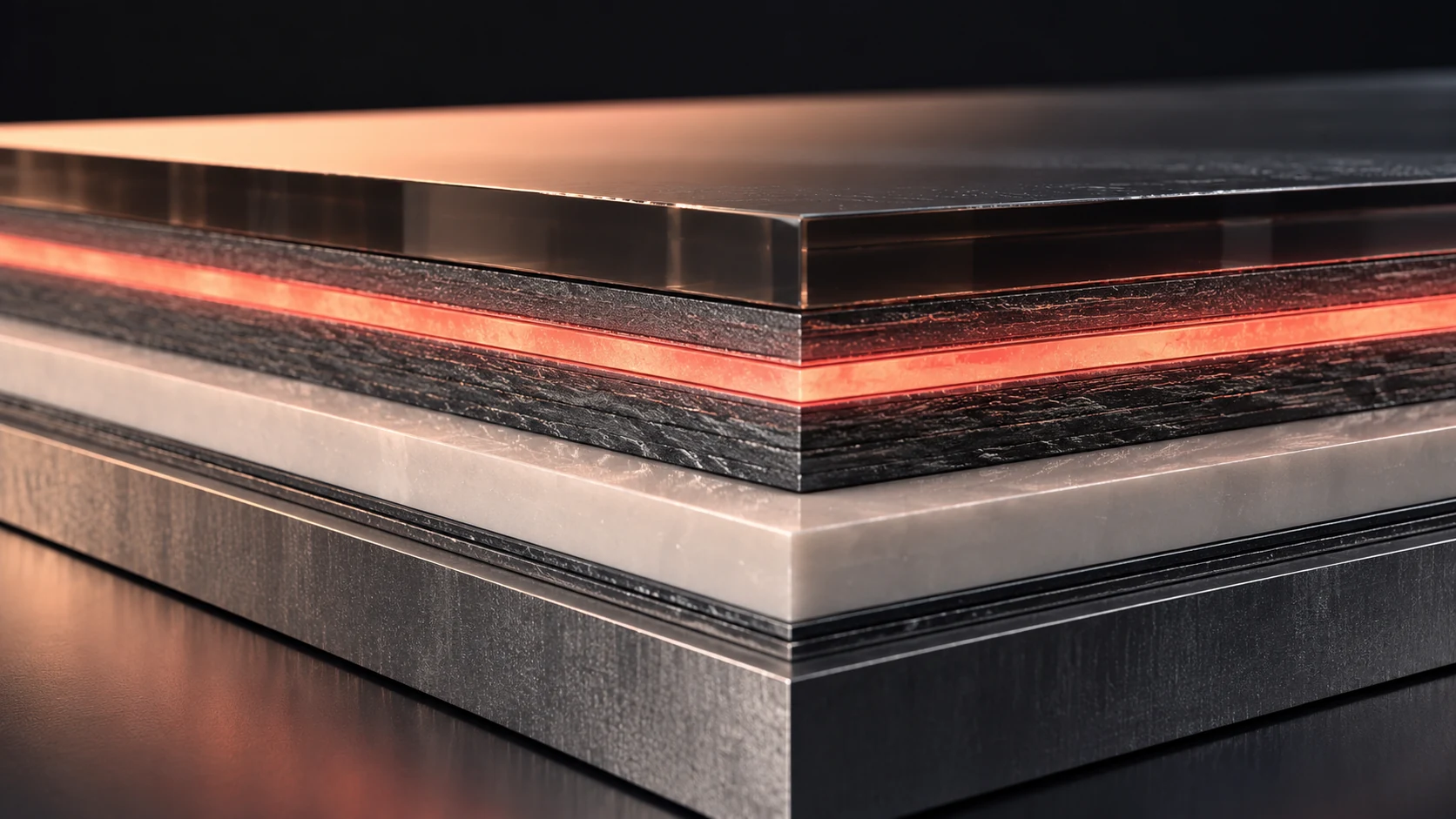
Concept cutaway of a thin interface inside a layered semiconductor

Material interface concept · Not microscopy

03 / A CONCRETE STARTING POINT

Half a nanometer.
A different prediction.

10 → 10.5 nmModeled change in well width
−6.10 meVCalculated shift in lowest transition energy
0.00054 meVLargest solver disagreement among checked levels

Standard-physics calculations using nominal materials. No physical device result is claimed. Material and measurement uncertainty exceed numerical disagreement.

Change the geometry yourself
THE LEARNING LIBRARY

Go deeper.
Know what to test.

168 focused guides connect quantum confinement, measurement, geometry, simulation and development. Start with a question; leave with a decision.

Find your learning path Start here
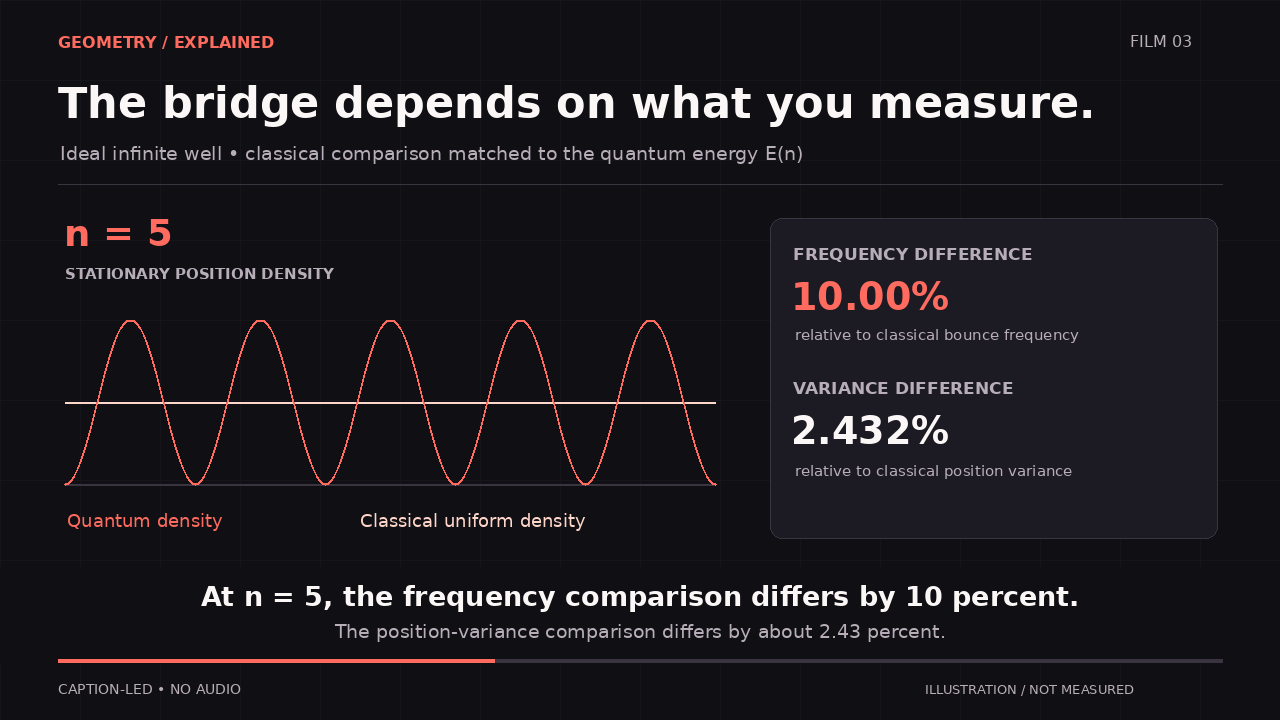
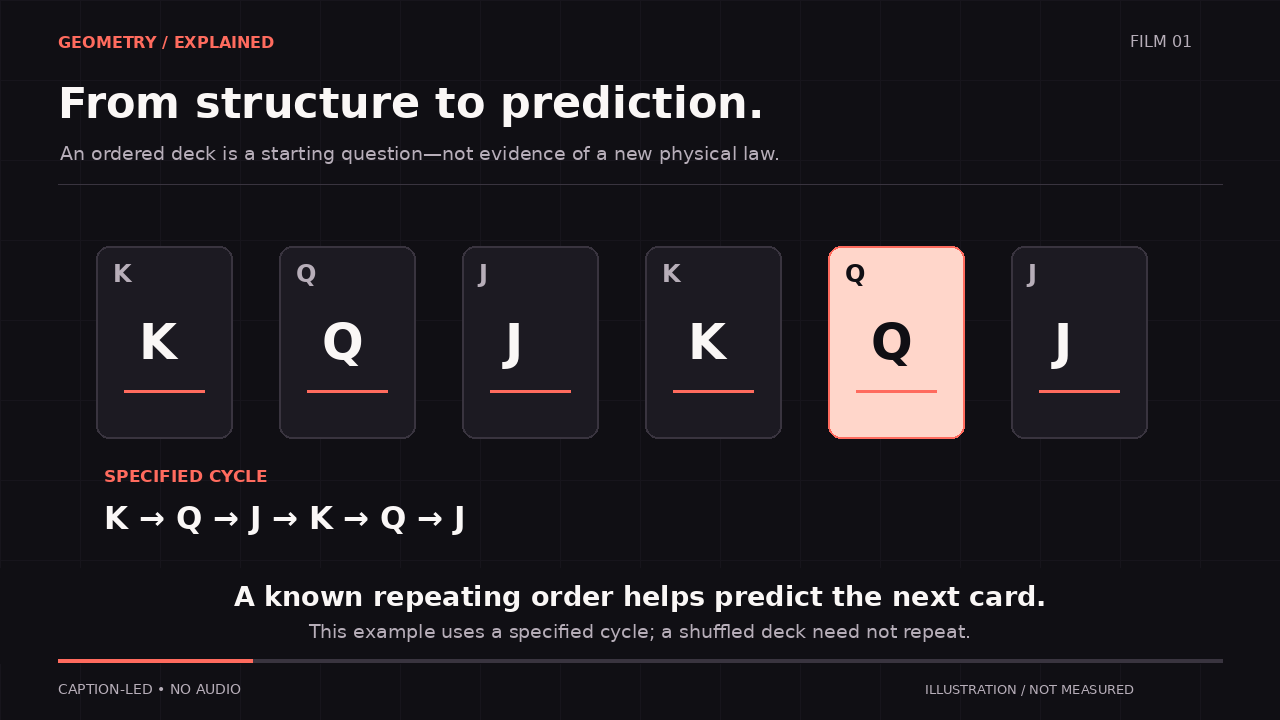
04 / EXPLAINED IN MOTION

See the reasoning.

A narrated walkthrough and three short visual explainers. Actual model data, visible assumptions and chapters you can revisit.

NEW / 1 MIN 39 SEC / SYNTHETIC NARRATION

From boundary to evidence.

A complete walkthrough of the width change, the model checks and the measurement that comes next.

Synthetic voice · Captions embedded in the picture · Calculated and illustrative graphics · No laboratory footage

Read the complete transcript

MATTERVOLT — NARRATED MODEL WALKTHROUGH
Synthetic narration: offline Flite slt voice. Calculated, not measured.

Geometry sets the question
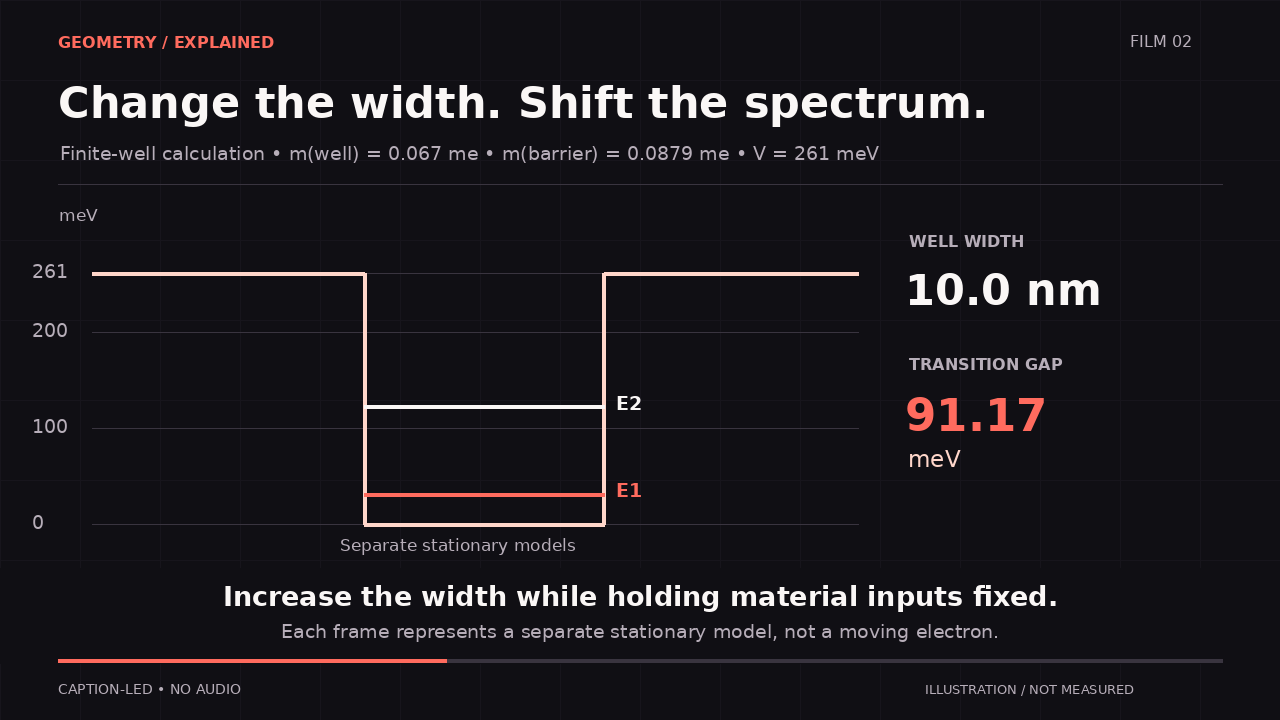
At a small enough scale, geometry changes the energies a quantum model allows. A boundary becomes part of the physics. MatterVolt starts with a precise question: how does changing a well width change its calculated energy spacing?

Half a nanometre. A calculable shift.
In this finite well model, a width of ten nanometres gives a first to second level gap of ninety one point one seven millielectronvolts. At ten point five nanometres, that gap becomes eighty five point zero seven. The predicted change is about minus six point one millielectronvolts.

The boundary assumption matters
An infinite wall is an idealization. A finite barrier permits the wavefunction to extend beyond the well. At ten nanometres, these two boundary assumptions give different energy gaps. The finite barrier model uses specified material masses and a specified barrier height.

Check the calculation
Two numerical approaches provide a consistency check: boundary matching, and a spatial grid solver. For the checked levels and widths, their largest difference is about zero point zero zero zero five four millielectronvolts. Agreement checks the calculation; it does not validate a physical device.

Design the measurement
The next step is a measurement plan, with paired sample widths, calibration, controls, and a stated uncertainty budget. The predicted shift must be compared with measurement uncertainty and material variation. This is a proposed experiment, not a demonstrated result.

From prediction to evidence
Calculation is the first gate. A credible program then specifies the experiment, measures the samples, and repeats the result. MatterVolt makes the assumptions visible, so the next decision can be tested. Calculated, not measured.
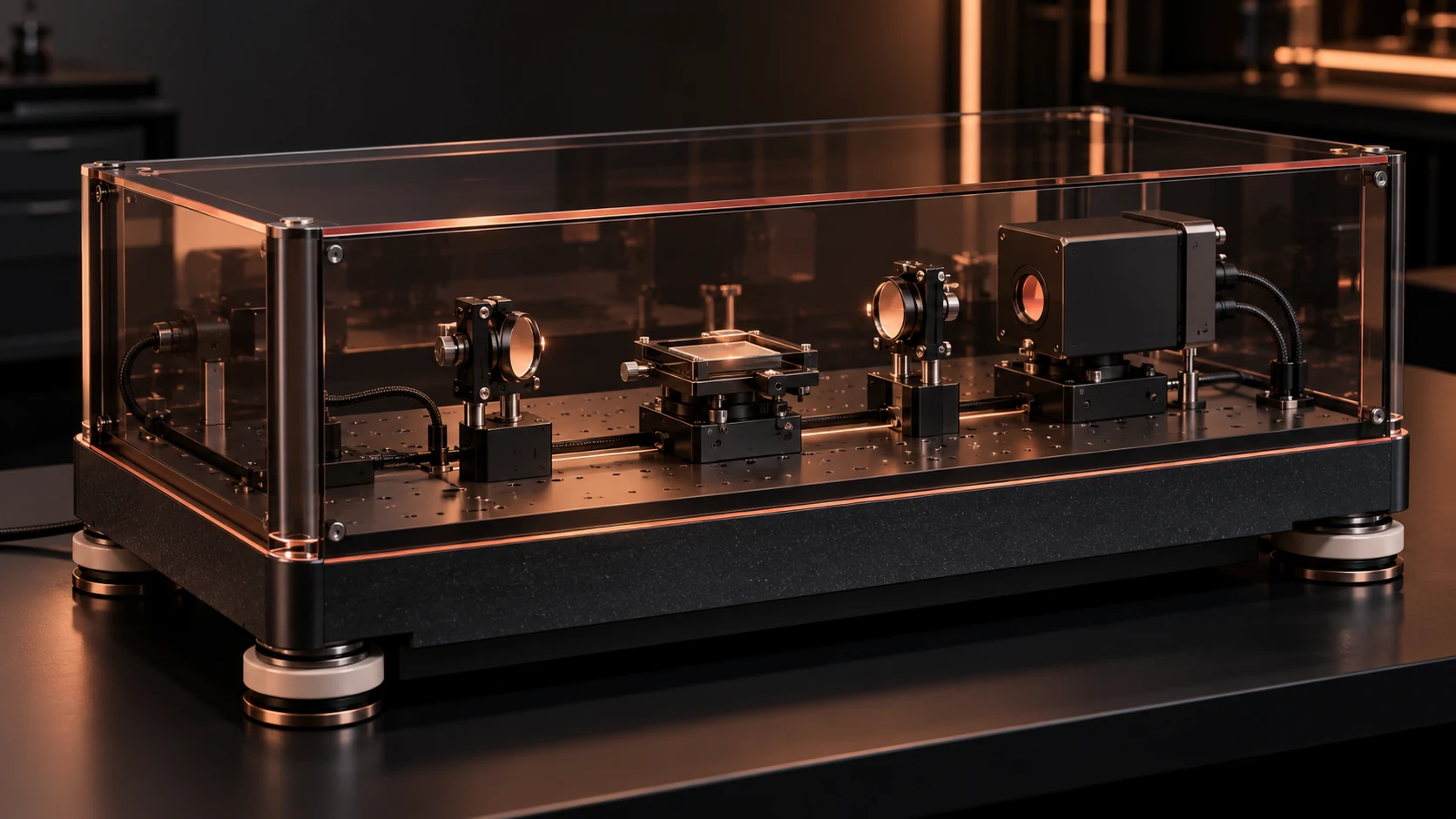
Concept of a future enclosed optical measurement system
05 / THE MEASUREMENT COMES NEXT

A calculation becomes evidence
when it meets the instrument.

SignalProof defines what must be calibrated, controlled and reproduced before a measured discrepancy earns an interpretation.

Inside the measurement program

Instrument concept artwork · Not built hardware

06 / BUILD THE VALUE. DOCUMENT THE RIGHTS.

An IP strategy
built into the work.

Specific inventions may become assets. The chain of ownership must be documented, and disclosure decisions must come before publication.

01 / DEFINE

Technical improvement

State the problem, the implementation and the result it is meant to improve.

02 / RECORD

Human contributions

Preserve design decisions, research evidence and contributor provenance.

03 / SECURE

Clear ownership

Review assignments, background rights, collaboration terms and third-party materials.

04 / PROTECT

The right asset

Evaluate patents, trade secrets, copyright and brand protection separately.

Bring a precise question.
Build a defensible answer.

Start a conversation
NEW / EXECUTED OPTICAL MODEL

The transition now
has a calculated strength.

A finite-well dipole calculation feeds an explicit 40-layer optical model, with independent numerical checks. The assumed baseline gives about 0.19% peak absorptance. Physical measurement is the next gate.

Inspect the calculation and test plan ↗